Understanding Lung Health
Early detection accuracy
Minutes — full screening
Heart Health
Heart Health
Heart Health
Heart Health
Heart Health
Heart Health
Heart Health
Affects 1 in 15 Indian men | Nura AI detects years earlier
Exterior Lung
- Most common form
- Occurs mainly in current or former smokers, but is also found in young adults, women, and people who have never smoked.
- Usually begins in the outer regions of the lungs
Interior Lung
- Usually begins in the center of the lungs
- Often spreads to other parts of the body because of constant flow of blood and lymph through the lungs
- May cause symptoms at an early stage as compared to cancer in the outer lungs
People who smoke are at greater risk of developing lung cancer than people who do not. The risk of lung cancer increases with the length of time and number of cigarettes you have smoked. If you quit smoking, even after smoking for many years, you can significantly reduce your chances of developing lung cancer.
Signs and symptoms of lung cancer typically occur when the disease is in an advanced stage. It is the most common cancer In India and is the leading cause of cancer-related mortality in men.
Stages of Lung Cancer
Lung cancer typically doesn’t cause obvious symptoms in the earlier stages, making early detection difficult without screening tests.
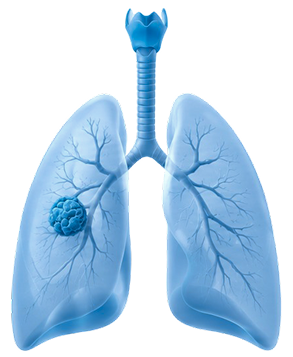
- Stage - Early
Confined to a single area
Cancer is detected in the lung, but it has not spread outside the lung.
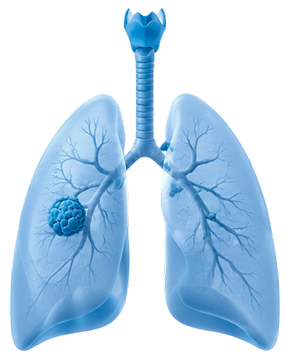
- Stage - Localised
Grown, may affect lymph nodes
Cancer is detected in the lung and has spread to nearby lymph nodes.
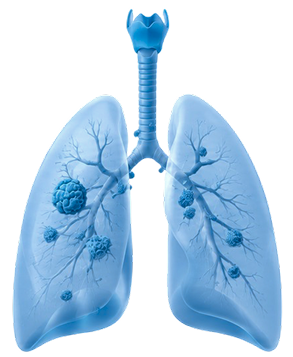
- Stage - Regional Spread
Spread to nearby tissues
Cancer is detected in the lung and lymph nodes in the middle of the chest.
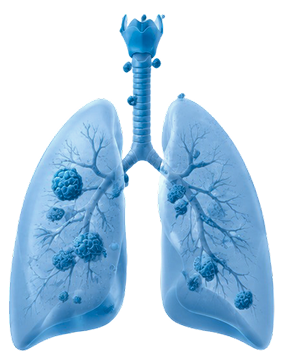
- Stage - Distant Spread
Spread to other organs
Cancer has spread to the other lung, surrounding areas, or distant organs.
- Small-cell lung cancer has two main stages: the limited stage, where cancer is found in only one lung or nearby lymph nodes on the same side, and the extensive stage, where cancer has spread throughout one lung, to the opposite lung, or to distant organs.
Risk Factors
Several lifestyle and environmental factors can significantly increase your risk of lung cancer. Know them early.
- Tobacco consumption and inhaling secondhand smoke (smoke exhaled by the smoker) increases your risk for lung cancer
- Poor living and working conditions are known to increase the risk of lung cancer. This includes exposure to arsenic, chromium, diesel exhaust, silica, nickel, and chemicals in the workplace or to toxic chemical particles from smoke clinging to household items like curtains, furniture
- Inhaling asbestos fibers has been directly linked to increasing the risk to lung cancer and other respiratory conditions. Asbestos is widely used in house construction, automobiles parts and textiles.
- Exposure to Radon that is released naturally from dirt and rocks, construction material, and natural cooking gas. It can accumulate in homes and buildings and is usually highest in the basement.
- An unhealthy diet with a low intake of foods like carrots that are rich in beta-carotene, a Vitamin A deficiency, or drinking water contaminated with arsenic put you at a higher risk of lung cancer.
- People with a family history of lung cancer in first degree relatives (parent, sibling, or child), sharing the same living space with an affected person, or have received radiation therapy to the chest area are at higher risk.
Nura Recommends :
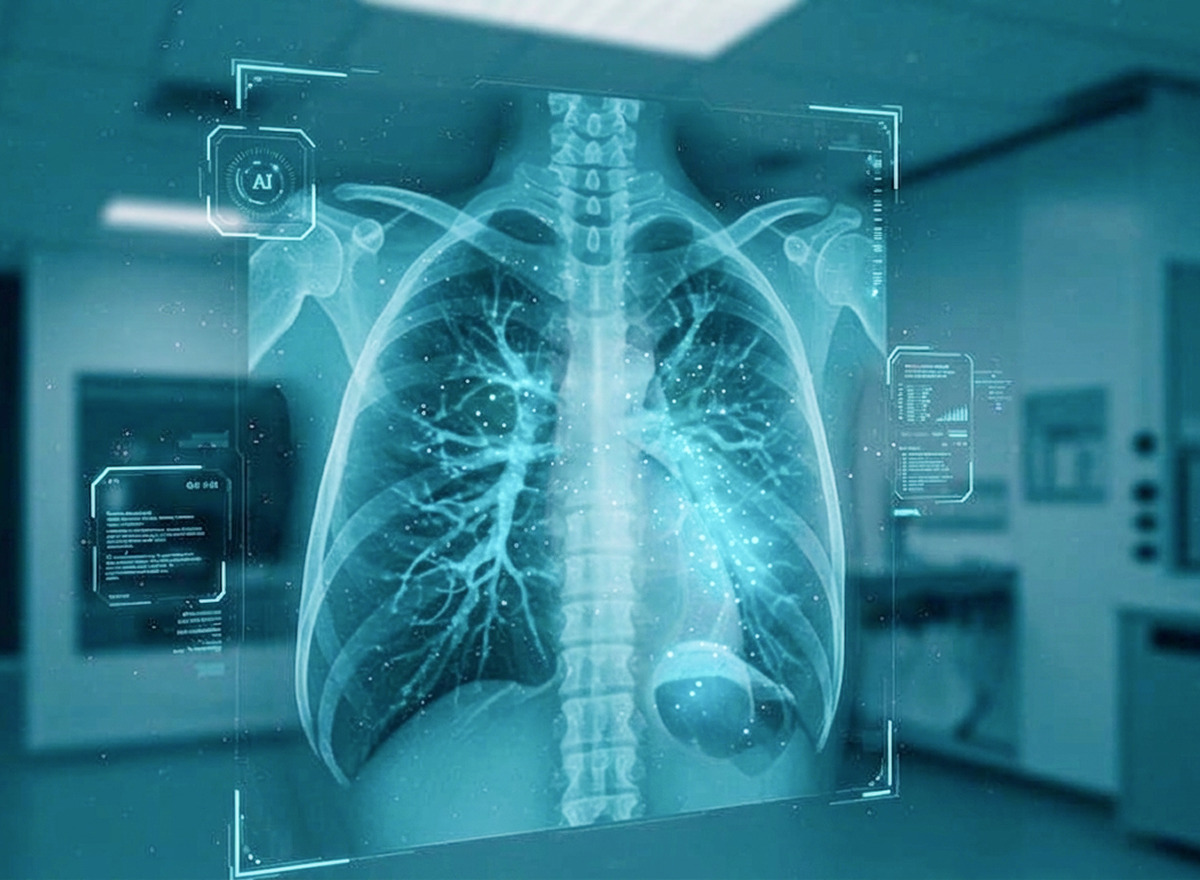
Early screening is the smartest way to protect yourself. Nura’s advanced low-dose CT with Japanese Ai can detect lung issues years before symptoms appear.
- Start screening at age 35, or earlier if you have any of the above risk factors
- Annual screening gives the most accurate picture of your lung health
- No fasting, no preparation — quick and comfortable walk-in screening
- Get expert-reviewed reports on the same day
Screening for Lung Cancer
India has the highest number of COPD cases and related deaths in the world.
Chronic obstructive pulmonary disease (COPD) is an inflammatory lung disease that obstructs airflow from the lungs. Its symptoms include breathing difficulty, cough, mucus (sputum) production and wheezing. Existing lung conditions such as emphysema and chronic bronchitis are the two most common contributors to COPD. Emphysema involves damages to the lungs over time. The alveoli, tiny air sacs in the lungs, are damaged because of cigarette smoke or other irritating gases and particulate matter. Chronic bronchitis involves a long-term cough with mucus. COPD symptoms often don’t appear until significant lung damage has occurred, and they usually worsen over time, particularly if smoking exposure continues. India has the highest number of COPD cases and related deaths in the world. After heart diseases, it is the second most common cause of death in the country. People affected with COPD are at an increased risk for developing heart disease, lung cancer and a variety of other conditions. However, it is preventable if found early. With proper management, most people are able to control its symptoms, as well as reduce risk of other associated conditions.
People who smoke are at greater risk of developing lung cancer than people who do not. The risk of lung cancer increases with the length of time and number of cigarettes you have smoked. If you quit smoking, even after smoking for many years, you can significantly reduce your chances of developing lung cancer.
Signs and symptoms of lung cancer typically occur when the disease is in an advanced stage. It is the most common cancer In India and is the leading cause of cancer-related mortality in men.
Risk Factors
Several lifestyle and environmental factors can significantly increase your risk of lung cancer. Know them early.
- Smoking and exposure to second hand smoke increases your risk of COPD, especially in addition to having asthma or certain genetic factors.
- Poor living and working conditions like exposure to dusts and chemicals in the workplace or to fumes from burning fuel in poorly ventilated homes increases the risk for COPD.
- Older age, specifically over the age of 40, puts you at greater risk of COPD, as symptoms take years to develop.
- Genetic disorders like alpha-1-antitrypsin deficiency, though rare, is the cause of some cases of COPD.
Nura Recommends :
Early screening is the smartest way to protect yourself. Nura’s advanced low-dose CT with Japanese Ai can detect lung issues years before symptoms appear.
- Start screening at age 35, or earlier if you have any of the above risk factors
- Annual screening gives the most accurate picture of your lung health
- No fasting, no preparation — quick and comfortable walk-in screening
- Get expert-reviewed reports on the same day
Screening for COPD
There is evidence that suggests that COPD is under diagnosed in India, partly because diagnosis is based on symptoms (for which people are often late in seeking help)
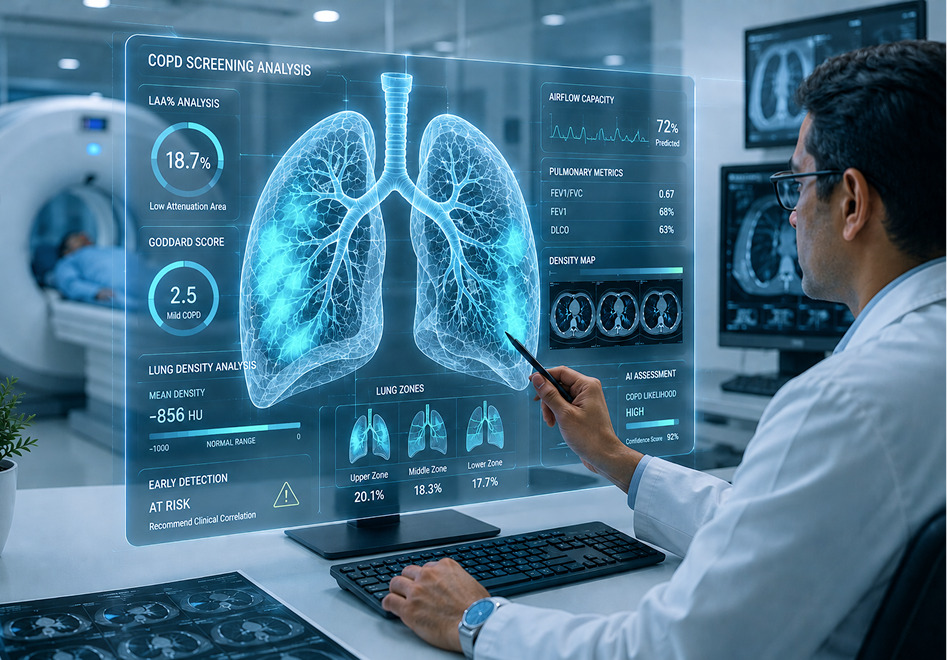
A CT Scan can identify LAA% (Low Attenuation Area) as COPD identification with the Goddard score which is a global standard system.
Know what's happening inside your body
Explore your healthy screening results across 12 vital health parameters.
Lung Health